Richmal Crompton: Beyond Just William - Unearthing Her Adult Fiction
Richmal Crompton Lamburn, universally known as Richmal Crompton, holds a cherished place in the annals of English literature, primarily due to the enduring mischievous charm of William Brown. For generations, she has been celebrated as the beloved
Just William Author, crafting tales of schoolboy antics that have captivated young readers and nostalgic adults alike since the first collection, *Just William*, appeared in 1922. However, to confine Richmal Crompton solely to the world of scraped knees and secret societies is to overlook a substantial and equally compelling body of work: her prolific adult fiction. While William's adventures garnered her widespread fame and enduring popularity, a deeper dive into Crompton's literary life reveals an author of immense versatility, keen social observation, and profound depth, whose adult novels and short stories offer a richly textured understanding of 20th-century life and womanhood. It's time to move beyond the schoolyard and explore the sophisticated narratives penned by this extraordinary woman.
The Shadow of William: Why Her Other Works Were Overlooked
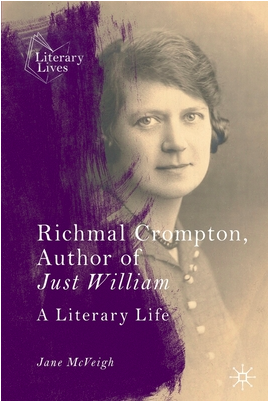
The sheer success of the William series, which spanned nearly five decades and more than 40 books, cast a long shadow over Richmal Crompton's other literary endeavors. Her iconic character, an endearing rebel whose escapades resonated with the spirit of youth, became synonymous with her name. This immediate and widespread association, while a testament to her genius in children's literature, inadvertently led to her being pigeon-holed. As Jane McVeigh meticulously details in *Richmal Crompton, Author of Just William: A Literary Life*, Crompton, as a woman writer in the early 20th century, faced the unique challenge of being categorized primarily as a children's author. This prevailing literary climate often meant that her serious adult novels and insightful short stories were sidelined and largely overlooked by critics and the wider reading public, who struggled to reconcile the creator of the irrepressible William with an author tackling complex adult themes.
The early 20th century literary landscape, while vibrant, also had its biases. Women writers, especially those achieving commercial success in what might be perceived as a lighter genre, often found it difficult to be taken seriously for their more profound work. Crompton's impact on children's literature was so monumental that it inadvertently obscured her multifaceted identity and contributions to adult fiction. McVeigh's biography highlights this very issue, arguing that more than a century after *Just William* was first published, it is crucial to place Richmal Crompton among other significant 20th-century women writers, recognizing the breadth and depth of her complete oeuvre.
A Diverse Literary Landscape: Exploring Crompton's Adult Novels and Short Stories
Richmal Crompton's adult fiction reveals a sophisticated writer unafraid to explore the complexities of human experience. Far from the lighthearted antics of William, her adult novels and short stories delve into profound themes, offering nuanced psychological portraits and incisive social commentary. For instance, she tackled sensitive subjects such as domestic violence and disability, often drawing from her own experiences and observations. As a disabled writer herself – having contracted polio as a young woman – her portrayal of characters with disabilities was imbued with authenticity and empathy, offering perspectives rarely seen in the literature of her time. This deep understanding of personal struggle and societal challenges allowed her to craft narratives that were both poignant and powerful.
Her profound knowledge of Classical Greek and Latin literature and languages also played a significant role in her literary persona, enriching her prose and thematic depth in ways that might not be immediately apparent to readers only familiar with William. This classical grounding likely contributed to her disciplined narrative structures, her exploration of moral dilemmas, and her ability to weave intricate character arcs. While specific titles of her adult works are less widely known, the themes she engaged with suggest a writer interested in the interior lives of her characters, the intricacies of relationships, and the often-unseen struggles within domestic spheres. Her adult stories often examine the constraints and expectations placed upon individuals, particularly women, offering a lens through which to view societal norms and personal resilience in the interwar and post-war periods. Through her adult fiction, Crompton proves herself to be a keen observer of human nature, capable of crafting narratives that are both thought-provoking and emotionally resonant.
Richmal Crompton: A Writer for All Ages and Her Crossover Appeal
One of the most intriguing aspects of Richmal Crompton's broader career is her pioneering, albeit perhaps unrecognized, role in "crossover fiction" – literature that appeals to both adults and children. While William's adventures were ostensibly for children, their subtle wit, timeless observations of human behavior, and the underlying comedic genius ensured a significant adult readership. Similarly, elements of her adult fiction, though darker in theme, often retained a readability and narrative drive that could bridge generational gaps. This dual appeal speaks volumes about her skill as a storyteller, capable of tailoring her voice to different audiences while maintaining a distinctive authorial presence.
Her media profile, extending to radio and television adaptations, further showcased her ability to reach diverse audiences, amplifying her international success beyond the printed page. Whether through William's misadventures or the deeper explorations of her adult works, Crompton consistently demonstrated an ability to connect with readers on multiple levels. In this regard, she stands shoulder-to-shoulder with other prominent 20th-century women writers who challenged traditional genre boundaries and explored the rich tapestry of human experience. Understanding her as a crossover author enriches our appreciation of her craft, showing her to be a writer who understood the complexities of both childhood innocence and adult responsibility, often finding common ground in the universal human quest for belonging, understanding, and self-expression. For those interested in exploring authors who successfully navigate the space between children's and adult literature, investigating Richmal Crompton's full bibliography offers a rewarding journey into the early examples of this intriguing literary phenomenon.
Reappraising a Literary Legacy: Why Crompton's Adult Work Matters Today
The re-evaluation of Richmal Crompton's entire body of work, particularly her adult fiction, is not merely an academic exercise; it's a vital act of literary reclamation. Biographies like Jane McVeigh's are indispensable in providing the context and critical analysis necessary to understand and appreciate authors beyond their most famous creations. By shining a light on Crompton's less-known fiction, we gain a more complete picture of an artist who was deeply engaged with the social and psychological issues of her era. Her portrayal of challenging themes such as domestic violence and disability in her adult novels offers valuable insights into the social history of the 20th century, and her nuanced approach ensures their continued relevance to contemporary readers grappling with similar issues.
Moreover, understanding Richmal Crompton as more than just the
Just William Author enriches our perception of her as an artist. It reveals her intellectual prowess, her profound empathy, and her courage to tackle difficult subjects. This comprehensive view helps solidify her place among other significant 20th-century women writers, recognizing her contributions not just to children's literature, but to the broader literary canon. To delve into her adult fiction is to discover a voice that is often surprising, always intelligent, and consistently engaging. Readers are encouraged to seek out works that move beyond her famous schoolboy, and discover the full, multifaceted genius of Richmal Crompton, a disabled woman writer whose literary life extended far beyond the bounds of childhood mischief. Discover more about her unique contributions in
Richmal Crompton: A Disabled Woman Writer's Multifaceted Literary Life and gain further insight into her literary standing by reading
Reclaiming Richmal Crompton Among 20th Century Women Writers.
In conclusion, Richmal Crompton's legacy is undoubtedly anchored by the everlasting appeal of William Brown. However, to truly appreciate the breadth and depth of her literary talent, it is imperative to look beyond the adventures of the iconic schoolboy. Her adult novels and short stories stand as a testament to her versatility, her keen insight into human nature, and her willingness to explore the complexities of life with both grace and unflinching honesty. By rediscovering this overlooked facet of her oeuvre, we not only pay homage to a remarkable author but also enrich our understanding of 20th-century literature as a whole. Richmal Crompton was much more than just the
Just William Author; she was a literary force whose diverse works deserve a place in the spotlight.